Confessions from the Trail: Being Comfortable With Being Uncomfortable

Breaking your characters with realism: The intersection of ultramarathons and writing fiction
It was a shitty, but awesome long run today.
Yeah, blink hard and read that again. I ran 6 miles, at a fair pace for me, in driving rain with 1-2” of standing water on the trail.
It was terrible.
And it was perfect.
Why? Because I slogged those miles out at a good pace with wet feet. And you know what I’ll have at MS50k this spring? That’s right, 25+ creek crossing and 7-9 hours of wet feet.

I’ve talked about the “pain cave” and why sometimes you have to run when it sucks. For those who don’t want to read the article, the TL;DR is that the race will suck, you will be in pain, and training your body is great, but if you don’t train your mind to push through the pain, you will not finish.
Ask me how I know.

But what does running through pain, foul weather and tough terrain have to do with writing? Everything. Tough running can, and likely will, break you. MS50k broke me back in 2016. I didn’t finish the full 50k, settling for a paltry 20k (12.4 miles for my non-metric friends). I was broken physically, mentally, and emotionally. Maybe cracked, not fully broken, but it’s taken a full five years to have the courage to try again.
Now think about your favorite characters, the ones who really mattered to you. Did Frodo simply walk into Mordor? Or was he tested, broken, and forced to rise again? A good character is one who is not only told “no,” but “hell no,” then kicked in the teeth for good measure. They’re the character we root for when we watched them come to the brink and faced with the choice to accept the inevitable yet rise against all odds.
And that breaking is where ultramarathons and fiction writing intersect. I love the adage, “write what you know.” Dear readers, let me tell you, I know what it’s like to be broken. To rise again. To stare into the void, see the eyes that stare back, and tell them to fuck off. And hot damn, when I put it into my writing, it’s some powerful stuff.
One of the problems is, how do you write a character that steps to the edge of the void without going there yourself? I would offer that more writers need to get comfortable with being uncomfortable. This isn’t a new concept and I’ve seen it on may TEDTalks or ultramarathon documentaries. (One of my favorite talks comes from David Goggins, who in addition to being a former Navy SEAL and Air Force TACP, is also an ultramarathoner. Yeah, he’s a bonafide badass.) You can do all the research in the world on a subject, but until you try and test yourself to the limit, how will you know what your characters feel?
Now, am I telling you to go get hit by a car, break your leg, break your heart, get shot, or attacked to know what it feels like? Hell no. Don’t be silly. But you can get adjacent to experiences. Need to know what the adrenaline rush feels like? Go do something exciting: bungee jumping, skydiving, hang gliding, or some other experience that’s equal parts fun and death-defying terror. Be uncomfortable.

Maybe your character is put into a painful experience and you need to be able to describe what it’s like. Find an activity that will drain you physically and make you hurt, but not injured. I, of course, advocate for a long run. Don’t just do the run; listen to your body. How do your legs feel? How does your mind feel about it? What does it feel like to be mildly dehydrated? What are you doing differently because you’re tired and achy? Make your character feel that, only amplified. Be uncomfortable.
And for the love of all you hold holy and dear, keep a notebook! I have a “Confessions from the Trail” notebook. I write my mileage, the book ideas I got while running, and how I feel in the notebook. Later, when I need to write a character who is breaking or in pain, that’s my go-to. Be uncomfortable and take comfort in that discomfort. As our grandparents would say, it builds character(s).
Happy trails!
Enjoy what you just read? Please share on social media or email utilizing the buttons below, fans like you sharing what they love are what keeps this train rolling!
Want to read more works by Author KR Paul? You can find my first novel here and it’s sequel here.
Want more than that? Follow me on Twitter, Instagram, Facebook, and TikTok. Stay up to date on the latest KR Paul news by joining our mailing list.
Just looking for wild stories of cave diving, ultramarathons, blacksmithing, or powerlifting. Yeah, I’ve got those too!
Confessions from the Trail: Gear Monsters

“You carry HOW MUCH?”
Another question I fielded as I started talking ultramarathons on this blog was, “What [piece of gear] do you use?,” “How much does your pack weigh?,” or the ever incredulous “You carry HOW MUCH?”
It’s no secret; ultramarathoners are gear monsters.
I do know some runners that are minimalists when they run. They are the stoics, the monks of the ultramarathon world. They, like I, believe that our culture has gone soft and isn’t used to enduring discomfort and a little pain to achieve a goal. However, they take this to extremes as I think there are certain items you need to have to complete a race. (The average course director has their say as well, mandating each person carries a minimum amount of water, flashlights, and batteries, or they don’t race.) On the far end of the spectrum, you get the folks who have every cool gadget, gizmo, and doo-dad you can possibly carry. More power to them, but it’s extra weight I don’t want to lug for the long haul.
What, in KR Paul’s inexpert but somewhat experienced opinion, is necessary, nice to have, and not needed? Let’s dive in!

First off, my credentials for those who are new: I’ve been an endurance racer for over ten years. I’ve run distances from 5k up to a planned 50k in March 2021. I’ve completed five Ironman 70.3s. And with my current spin up for the Mississippi 50 (50k/31mi) and Bataan Memorial Death March (26.1 mi), I’m logging 15-20+ miles a week, mostly on the trails. I’m also a woman, so my gear recommendations will be from that perspective. Male bodied friends, take my thoughts with a grain of salt, and I’ll try to be specific if something is a direct recommendation for those of us with hips, butts, and boobs.
The Necessary: If I forgot anything on this list, I can’t race.
Clothes: You could run naked, but you’d probably be thrown off the course. Hell, on hot days, I’m wearing as little as possible, but some clothing is still going to be necessary. If nothing else, what are you going to pin your race number to? I look for synthetic clothes, usually listed as “performance wear” or “wicking” because chaffing is horrible! I recommend layers on cooler days as a 50F starting temp can easily reach 80F by mid-day. Conversely, when the sun goes down, you’ll be back to 50F and need that long sleeved shirt again. Well cushioned socks are a must and NO HOLES. On hole over five miles is fine. One hole over 15 miles puts a hole in your foot that you will have to repair mid-race.
Ladies: You’ll need a high quality bra. Like shoes, this is one area I just don’t scrimp. For my A/B/C ladies, you can be less picky, as long as they hold the girls in place. For those of you who, like me, are double delightful and beyond, this is probably the single most important investment you can make. I prefer the SheFit brand because I can tighten both the chest band and shoulder straps. (Not a SheFit affiliate; they just make good stuff.)
Shoes: Rule number 1: get a shoe fitting from a reputable running store. They will identify how your foot strikes the ground and make a recommendation based on that. Be a good customer and buy the pair they recommend. You can buy the next pair on Zappos or Amazon or whatever, but get the fitting first and buy the shoe.
GPS: Some people might debate that GPS is only a “nice to have,” but I get way back in the woods and need something that doesn’t require my phone and will always get me back to where I started. For example, MS50 has almost no cell service at the course start and it’s patchy at best during the race. I need a GPS to tell me milage for my nutrition plan.
Headlamp (with spare batteries): If you are going to be running after the hours of daylight, the course director will probably require not only a flashlight but spare batteries as well. I have two knuckle lights I use for early morning runs on the road, but for a trail run, I need my hands. I highly recommend getting a headlamp. The beam will always point where you want it and it’s more steady when worn on your head than your wildly swinging hands. It also makes for an easier time grabbing snacks! 😊

Hydration pack: You must carry water. Non-negotiable. Unless you’re in a timed, looped course where you are back at the start every hour or so, you must carry your own water. I know some folks who use handheld bottles, but as with the light source, I want my hands free, so I like a vest style hydration pack this this one from Ultimate Direction. (It’s an older model, they have newer ones out now.) Plus… pockets for your snacks!

Food/water: As discussed in my nutrition post you will need to carry food and water with you. Know what you like, but know that it’s necessary
Nice to Have: If I forgot anything on this list, I could race, but it’s probably going to be a tough day.
Spare clothes/shoes: Many longer courses allow you to have a “drop bag” or, like MS50, will loop back by the starting point so you can access your car. After two or more hours slogging in wet clothes, it’s really, really nice to change into clean, dry socks and shoes. Can I make the second (or third) lap without them? Sure, but I’ll be miserable.
Hat/visor: Many of the courses I’ve run are trails through wooded areas and a hat/visor is unnecessary for keeping the sun out of your eyes. However, you’ll occasionally have the one stretch through an uncovered gravel road where you’ll be missing that cool shade on your face. One caveat: in cold weather racing, a hat is necessary.
Sunglasses: same as the hat/visor. I don’t need it, but it’s really nice when I hit those sunny patches of the course. Or a mess of spider webs. But let’s be honest, I’m a middle- to back-of-the-pack runner; someone’s always catching spiderwebs for me on race day!
Headphones: These are the borderline between “nice to have” and “unnecessary.” I don’t hear headphones on trails. But if I’m doing any training on the road, which is typical as I ramp up into race day, I need my tunes.
Gloves: I buy the cheap $1 knitted pairs from Walmart or the Dollar Tree. Use them for the start of a cold race and throw them away at the first aid station.
Bodyglide/Vaseline: This will become necessary by the end of the race, but enough aid stations have them that I don’t usually carry my own. That said, if you have many, many miles between aid stations on your course, carry a small baggy of your own.
Sunscreen/bug spray: Is my body incapable of running without either of these? No. Am I going to look like a lump, bug bitten lobster the next day without them? Yes. YMMV, make smart choices here.
Small med kit (in your drop bag): Your feet will get chewed up. Your shins and shoulders will get branch whipped. Your body will take a pounding and you will undoubtedly need tape, gauze, band-aids, and Vitamin M (ibuprofen) at some point. Good aid stations will have what you need, but I keep a small kit in my drop bag and carry a small plastic baggie of band-aids in my vest.
Tampons: Friends who menstruate, training and racing at this level will mess with your cycle. I carry two tampons in a baggie because you never know what will happen. Friends who don’t menstruate, you don’t have to carry them, but maybe be a pal and have one available for a friend. Or, use them to plug the hole you just punched in your thigh when you ran into a jagged log. (Yeah, I’ve seen some shit.)

Gaiters: I ran my first six or seven years without gaiters. I don’t plan on wearing them for MS50, but it’s a go/no-go item for Bataan. Gaiters will help keep sand, sticks, rocks, etc. out of your shoes. On wet/muddy courses, I don’t want them, but on sandy courses like Bataan or running here locally, I need them.
Unnecessary: I don’t carry it, rarely carry it, or it’s just plain goofy.
Trekking poles: Ok, ok, I know. Some people really love them. Especially if you’re going to be running where it’s mountainous or rocky, they’re helpful. But for me, I like having my hands free and I haven’t found utility for them based on my local terrain and race terrain. YMMV
Expensive running apps: Sure, you can drop a ton on an app that will track every mile, climb, water intake, food intake, and ounce of sweat exuded. Or you can just run and see what works, then log your miles on a spreadsheet. Or in a notebook. Or don’t log. Seriously, most of this is running by feel. I do have Strava and Garmin Connect, but mostly because I’m hyper-competitive (see: my two week long running duel with Angry Staff Officer), but I don’t find much utility in having a ton of data. Plus, they kill your phone battery and most courses are too remote to get good cell service mid-race.

A coach: Oooh, I’m gonna get feedback on this one! Does a coach help? Yes. Can they help you improve your time? Yes. Are they a good resource for when you first start out? Yes. Ok, that said, coaches are DAMN expensive so unless you are using your coach as a really good accountability partner, there are enough resources on the Internet that you can teach yourself what you need to know. The rest is holding yourself accountable and following the plan you create. When it all comes down to it, your coach isn’t running these miles, you are. If you didn’t put in the work, it’s not your coach’s fault. On the flip side, if you PR a course, you’re still the one who put in the miles, not your coach.
Now that some of you are ready to grab your torches and pitchforks, I’ll remind you, these are all recommendations based on my experience, not hard and fast rules. YMMV
How much does it all weigh?
Ok, for those of you who’ve set down the torches and pitchforks and are still with me, I bet you want to know how much all this gear weights. The answer is, not as much as you think. My shoes, clothes, hat, sunglasses, and GPS don’t generally weigh more than five pounds altogether. My vest, food, and water range from five to ten pounds depending on how much water I add.
Update: You can find the gear list for my last three races at the bottom of each race report
BUTS Bearly Ultra: A cold weather, very hilly course in the foothills around Birmingham, AL
Bear Bait 25K: A cooler race with flat but technical (read: rooted) trails in Pace/Milton, FL
Mississippi 50k: A full ultramarathon that spanned cool to warm weather and a non-technical, mostly flat course with multiple creek crossings.
Happy trails!
Enjoy what you just read? Please share on social media or email utilizing the buttons below, fans like you sharing what they love are what keeps this train rolling!
Want to read more works by Author KR Paul? You can find my first novel here and it’s sequel here.
Want more than that? Follow me on Twitter, Instagram, Facebook, and TikTok. Stay up to date on the latest KR Paul news by joining our mailing list.
Just looking for wild stories of cave diving, ultramarathons, blacksmithing, or powerlifting. Yeah, I’ve got those too!
Confessions from the Trail: Welcome to the Pain Cave

What It’s Like to Run for Hours
Running an ultramarathon is no easy feat. An ultramarathon demands not just physical effort, but the intense mental struggle of putting one foot in front of the other, long after your body wants to quit. Pulling from the list of questions about ultramarathons again, here is a great one: “What’s it like to run for so long?” The answer is different for every person, but for me (and many others), an ultramarathon is a period of highs and lows as well as trips into what we call “the pain cave.” And at the end, you have something you have truly earned.
The name “pain cave” is not unique to ultramarathons. Some of you are probably smirking and snickering as I’m sure the pain cave could be a physical location if you’re into that kinda thing. (I won’t judge, you do you, boo!) For triathletes and some CrossFit fanatics, a “pain cave” is your garage which has been converted into your own personal gym. Bike, treadmills, and weights aplenty; it’s everything you need except that the unchanging small space gets monotonous when you have long workouts.
For ultramarathons, as well as other endurance sports, the pain cave is a mentality and state of being. It hits at different times and the best you can do is accept it and keep moving.
Here’s a quick look at what I think (and feel) throughout an ultramarathon:
Mile 1: It’s a liar. Your legs, feet, and back feel fine. Your pace is easy, effortless even. If you could run like this all day, you’d cross the finish line with a smile on your face. It’s all a big, fat lie.
Mile 2-5, first hour: Settled into my pace, my mind is fully functional and I’m focused on the run. Tempo, pace, the strain of elevation; I feel it all.
Miles 6-10, the second hour(ish): My mind starts to wander; I usually have an alarm set on my watch or phone to remind me to eat. This is *my* golden hour because I’m most mentally capable but not longer purely focused on the run. My best plot building happens here. Most of Pantheon and its sequel were written in this beautiful hour.
Miles 10-15, the third hour: Pain is starting to creep in and my focus comes back to my body. How fast am I running? How do my feet/knees/lower back feel? Have I been eating and drinking enough? This hour will probably set the tone for the rest of the race. If my head isn’t right to go into “the pain cave” and dig deep while in pain, I’m not going to make it. It’s also the time where my stomach has to be right as well. If I can’t take in food and beverages here or worse, they’re coming back up, I’m definitely not going to make it.

Miles 15-25, hours four and five: Fuck this, screw this, I hate everything! Oh god I love running! I’m flying! My feet have the wings of Hermes himself and I am flying through this – GD it, I hate everything! Between the pain, fatigue, and an ever slipping grip on reality, my mind alternates between hating everything and trucking along happier than a puppy with a ball. There’s no in-between.
Miles 26-30, hour six: You are now definitely running an ultramarathon. For me, all I can do its mentally chant I’m gonna make it. I’m gonna make it. I’m gonna make it. I’m gonna make it. That chant is on repeat for about an hour as I shamble my way through the final aid stations and ignore that every part of my body is in pain.
Mile 31, an infinite and immeasurable amount of time: The last mile is tough to explain. You’ve come so, so far, but thirty miles done doesn’t make that last mile any easier. Honestly, I try to divorce myself from all reality. I place one foot in front of the other. The best I can do is keep an eye out for the finish line so I can dry my tears and wipe the snot off my face before someone gets a picture of me staggering across the line.

Honestly, I thought I was smiling when this photo was taken.
As you can now see, crossing the finish line for an ultramarathon is about more than physical endurance and nutrition. There is a mental endurance factor as well. You have to be strong enough to go into that pain cave and come out on the other side. Your body will keep moving much longer than your mind wants to allow. You spend so much time and mental effort convincing your mind that your body can go on, that you only hurt, and that you aren’t dying. I suspect this is why ultramarathoners get better with time. Some of it comes from putting in the years required to build that kind of stamina and endurance, but it also comes from living life.
Be honest, life beats you down, but every time you find the strength to stand back up and keep moving on, you build a little more mental resilience. The first three times I trained for a 50k, I thought I was mentally strong. After all, I had been trained “in the hardest of schools.” But it wasn’t enough to keep me moving forward. (Concurrently training for an Ironman has its effects, but I think I could have handled the pain cave better). Now, I’ve had some shit go down. I have seen the bottom of the hole and climbed back out. I’ve worked through my issues and have better coping techniques for mental resilience. I’m ready to go into the pain cave, battle my demons, and come out victorious.
I think many of us want to be tested. We recognize that our culture is soft, seeking softness and comfort in all things. The idea of willingly submitting your body and mind to this the antithesis of American culture.
But it shows you who you are.
Being able to subject your body to the battle with the course, to go into the pain cave, battle your demons, and come out victorious is something you can’t buy. You can’t cheat it. There is no short cut.

Happy trails!
Enjoy what you just read? Please share on social media or email utilizing the buttons below, fans like you sharing what they love are what keeps this train rolling!
Want to read more works by Author KR Paul? You can find my first novel here and it’s sequel here.
Want more than that? Follow me on Twitter, Instagram, Facebook, and TikTok. Stay up to date on the latest KR Paul news by joining our mailing list.
Just looking for wild stories of cave diving, ultramarathons, blacksmithing, or powerlifting. Yeah, I’ve got those too!
Big Week!

Do you remember finals week from your last week of school? Or maybe a particularly tough week of military training right before graduation? The “stressed but excited” and “I just have to make it through a few more days!” feeling? That was this week. It was a big week.
On Sunday, my friend and fellow writer/blogger/awesome human, the one and only Angry Staff Officer, was kind enough to let me pontificate on two of my favorite subjects: Star Wars and strategy. Or rather, the inaccurate depictions of strategic writing in Star Wars. Yes, I’m a nerd. Yes, I’m 100% ok with this!
Some fluke in the algorithms cause Google News to pick it up and thousands of people read it! Given that I’m pleased as punch to have 50 people read a “Confessions From The Trail” post or 20 people reading “Born, Not Bitten,” I was floored.

Not long after that article started going off the charts, I learned that some of my lucky readers got their paper versions 3, 4, and 5 days ahead of the official release! Very cool and it was a real treat to start seeing that book cover out in the wild, especially later in the week when the Kindle version was available as well.

On Tuesday, I had a birthday. I figured it would be ho-hum, nothing major but my family and coworkers really made the day feel special. I even got a custom Pantheon mask from my Mom. If that doesn’t scream 2020, I don’t know what does!

And of course, on Wednesday at midnight, Pantheon released.
I woke up to some positive feedback on Twitter from some of my kind readers. When I took a quick lunch break, three of my closest friends got almost identical texts:

Yup, in just over 10 hours on the market, Pantheon was the #85 Superhero book for sale on Amazon. At one point, as you saw in “Welcome to the Unreal,” it was the top 0.5% of book sales on Amazon.
By some stroke of luck, my box of books shows up a few hours before the release party. My spouse was kind enough to capture the moment. I thought I would be happy but mostly stoic. I did not think I would cry. I cried.

We cruised through the virtual release party and the lucky few who joined us got a chance to hear what it was like writing the story, my character creation process, the joys of running through the night, and more. It went more smoothly than I would have thought, so in the future, I might do virtual book signings and author meet ‘n’ greet events. Then, maybe once COVID is over, I can get out and meet you all in person!
Honestly, the rest of the week has been a blur. I turned off my social media apps while at work to keep focused there, but it as a struggle! Now I’m bringing my heart and mind back down from the stratosphere to sea level and the real world:
I’m doing Sober October with a friend. I ran a virtual 10k on the road last Saturday and I’ll run even further on the trail this Saturday. I signed up for the Mississippi 50 again, as the full 50k course. I’m determined to finish the distance this year! That means keeping on my training calendar and watching my nutrition.

But I’m still writing! I have an unrelated project due at the end of the year. I’m working through Act II of “Born, Not Bitten.” And of course, I’m doing my final edits of the next book in the Pantheon series, which will be titled…
…just kidding! You’ll have to follow me a little longer before I release that!
So, I will wrap this all up with a huge “thank you!” Thank you to my friends and family who have supported me. Thank you to my new friends, followers, and readers for taking a chance on this book. Thank you to everyone who has dropped a review at the purchasing source or on Goodreads. I feel so honored and lucky to have you all on this journey with me.
Enjoy what you just read? Please share on social media or email utilizing the buttons below, fans like you sharing what they love are what keeps this train rolling!
Want to read more works by Author KR Paul? You can find my first novel here and its sequel here.
Want more than that? Follow me on Twitter, Instagram, Facebook, and TikTok. Stay up to date on the latest KR Paul news by joining our mailing list.
Just looking for wild stories of cave diving, ultramarathons, blacksmithing, or powerlifting. Yeah, I’ve got those too!
Confessions from the Trail: Pre-Race Traditions

One of the questions I fielded as I started talking ultramarathons on this blog was, “What pre-race traditions do you have?” And I love this question because each person’s pre-race traditions are unique and hold a special meaning or purpose.
As for me? I’m mostly trying to stay sane!
The Traditions:
Obsessively packing/re-packing my gear/bag: Chalk this one up to getting my start in triathlons. They require a lot of gear: hat (with race number), goggles, tri suit, race day tattoo, cycling shoes, cycling glasses, helmet, bike, pump, towel, running shoes, sock, bra, sunscreen, three types of food, two types of drink, and a GPS was a bare minimum. If I was missing one of those items, chances are I was going to be a DNS (did not start). Unlike road racing, ultras require a boatload of gear, with a minimum requirement established by the course director, so you don’t die. I’ll cover gear later but assume top, bra, socks, two to three pairs of shoes, hat/visor, food, drinks, sunscreen, GPS, and a pack are the bare minimum. If it’s long enough, assume you’ll add more shoes/socks and a flashlight with extra batteries to the mix. With that much gear and a high risk of a DNS/DNF for not having it, I tend to double and triple check my gear the night before. I have probably packed, unpacked, and re-packed it at home as well. I’m a little obsessed.

Trying to sleep (and failing): While I’ve never written it down, I probably don’t average more than four or five hours of sleep the night before a race. Unfamiliar bed, nerves, weird noises, and the constant fear I’ll oversleep what is always a very early alarm means I wake up often and usually abandon my bed by four or five.
Calling my loved ones: I’ve traveled solo to most of my races. Let’s face it, getting up early to sit around in the wilderness waiting for a single glimpse of your loved one isn’t exactly a thrilling vacation. Now that I have a kiddo, my husband and I are rarely able to race the same event. So, I tend to travel to races solo and always call my family the night before to say good night and let them wish me well.
Cataloging the number of toenails, cuts, and bruises I have: One is likely to decrease and the other two are likely to increase. It’s good to know what’s new.
Mentally gauging the other runners: We all do it. We’re all also really bad at it, especially in ultras. That middle-aged lady who looks like she’s comfortably settled into an extra fifteen pounds? Yeah, she’ll be kicking your ass by mile 20. The super lean yoked dude doing CrossFit stretches? Yeah, he’ll burn out by mile twelve and you’ll probably pass him retching in the woods at mile twenty. The slim string bean with a beard so wooly you think all his chest hair migrated to his face? Yeah, he’ll be done, have collected his medal and be headed home as you’re hitting the last aid station.
Triple checking my GPS battery: My poor aged Garmin 310XT has died on the USAF Marathon and the Mississippi 50, so I’m wary of the old girl. **Update (09/30/2020): I have a shiny new Garmin Forerunner 945 for my birthday and it’s awesome! It’s been going days without a charge and I’m looking forward to using it at MS50 and BUTS Bearly Ultra.
By now, you’re probably asking if I have any fun or cool traditions and I’m sorry to disappoint you, I really don’t. I’m neither superstitious nor religious so there are no funny dances, fervent prayers, tokens of luck, or pre-race foods I have to have. My traditions are all good (mostly) habits born of a long time doing endurance racing. There’s definitely not a stuffed green Cthulhu that I must sleep cuddled up to any time I travel for a race.

Definitely not.
Happy trails!
Enjoy what you just read? Please share on social media or email utilizing the buttons below, fans like you sharing what they love are what keeps this train rolling!
Want to read more works by Author KR Paul? You can find my first novel here and it’s sequel here.
Want more than that? Follow me on Twitter, Instagram, Facebook, and TikTok. Stay up to date on the latest KR Paul news by joining our mailing list.
Just looking for wild stories of cave diving, ultramarathons, blacksmithing, or powerlifting. Yeah, I’ve got those too!
Welcome to the unreal?

Good evening and welcome to what will likely be a very raw and unfiltered post. Unlike many of my other posts, which go through a rigorous review and proofreading process, this is a little more stream of consciousness.
Why?
My paperback released for pre-sales today. And I was not emotionally prepared for the response.
For those of you who have been following me for a bit, you know my book released for Kindle pre-sales way back at the end of June. It’s been fun too! I occasionally check Amazon’s Author Central to see how it’s doing. I can tell when a post here hits a nerve or touches a heart because I’ll see a temporary spike in ranking from someone buying a copy of the book. It warms my heart that people trust a brand new author (been writing fiction for 20+ years) in their debut novel (in fiction, I’ve been published… elsewhere) enough to buy an e-book on pre-sale, full well knowing it will be a while before they can read it. I assumed in the pandemic end times of 2020, paper books, the antithesis of “buy now” and slow to ship, were dead.
But on social media (Twitter, FaceBook, and Instagram) I hear a different story. There were still a few wonderful and stalwart souls who, like me, love books, physical books.
A piece of another world they could hold in their hands. A sliver of some other reality they could curl up around, under a warm blanket, on a rainy day, to pass the time safely existing in another life.
These are my people.
A few people assured me they would buy the book, bless them, when it was available on paper. I took those pledges with a grain of salt, knowing that the busy world we live in washes over our memories, erasing those little hidden gems like the announcement of a new book. I don’t blame anyone who forgot it would be available as a real, physical paper book. I cannot begin to count the million little promises I made to myself over things I wanted that slipped from my mind. (And my bank account probably thanks me.)
My wonderful publisher got the book finalized and off to the publisher recently. (On time and budget, it’s a miracle!) And we were all pleased to see the first round of physical books would be available on release day!
I love Amazon but I didn’t have faith they’d have the physical copies up for pre-sale at all. Until today. I got a text early this morning “Hey, I thought you said your paperback wouldn’t be up for pre-sale?” Uh yeah, I didn’t think so either! Check. Double check. Ask for friends on Twitter to check for me… yes, it’s available for pre-sale. Oh, my goodness, I HAVE A REAL BOOK FOR SALE!
Look, if you’re a writer, you know. If you follow me because I run really far, let me explain: an e-book is amazing, you can read everything you’ve written, but when you grew up with a deep and abiding love for the smell of an old library, knowing your book with come to fruition in physical form is a minor miracle.
So, I smiled a little, went off to my day job, and enjoyed a day so long and stressful that I didn’t – couldn’t – stop for lunch. And when I came home, I decided to check my Amazon ranking again.
I almost passed out. I might have cried. I did math three times in two different ways because I didn’t believe what I saw.
In only a little over nine hours, my book was in the top 1.2% of paperbacks for sale on Amazon.
Let me blink really hard and clear my vision again.
Amazon has 8-million books available for sale. I’m in the top 1.2%... and it’s still in pre-sale.
Welcome to the unreal.
Yes, Amazon has crazy, wonky algorithms… yeah, it will probably drop. Yes, it will definitely drop.
But today. For just one day. I am a brand new fiction author with a book for sale that cracks not just the top 50%… the top 10%… but the top 1.2% of all Amazon’s physical books for sale. I am living a dream.
I am elated. I am so thankful for everyone who follows me. The people who support me, the would-be overnight success, fifteen years in the making. The people who have encouraged me through this journey. And if this crazy unreal continues, I will owe it to the people who have supported me along the way. As the man said, “You’re the real MVP!” and I am grateful for you in my life.
Enjoy what you just read? Please share on social media or email utilizing the buttons below, fans like you sharing what they love are what keeps this train rolling!
Want to read more works by Author KR Paul? You can find my first novel here and its sequel here.
Want more than that? Follow me on Twitter, Instagram, Facebook, and TikTok. Stay up to date on the latest KR Paul news by joining our mailing list.
Just looking for wild stories of cave diving, ultramarathons, blacksmithing, or powerlifting. Yeah, I’ve got those too!
Confessions from the Trail: Nutrition

Hello fellow distance runners, fitness lovers, and distance runner stans! Today we’re tackling a topic that requires a disclaimer upfront. Ready for it?
I am not, nor have I ever been a certified nutritionist, dietitian, or even remotely trained/certified in telling people what to eat.
Got all that? Cool. Don’t sue me. Any time we talk about nutrition, keep in mind that everyone is a walking chemistry set and what works for me may not work for you. Or, your mileage may vary. Literally YMMV.
Also, this will not be a post focused on weight loss all though I will touch on it. Why? One, it’s been done. Everything you need to know about nutrition can be found here. (Warning, this article has swear words; but if you’re on my blog, you’re probably ok with that.) Second, I don’t care about weight loss right now. I care about fueling my body for maximum training output.
That’s right. Food is fuel and I try to enjoy every delicious bite. And when I don’t enjoy the food, my brain hates it. (Hello, poor food choices!) And if I don’t eat enough, training suffers. (Hello slogging through runs…)
Instead, let’s focus on why nutrition is important, daily nutrition (short runs/rest days), and nutrition for the long haul (race day and long runs). Then I’ll lightly touch on running in a deficit at the end. Got all that? Excited? Then let’s go!
First off, we’re tackling why nutrition is important. Have you ever had one of those runs where you just feel off? Tired even when you had a full night’s sleep? Legs feel like lead? Fingers are swelling? Brin feels stuffed full of cotton balls?
Do you chalk that up to “it’s just a bad run” or did you ever look at your nutrition that day and the days before? No one just has “a bad run.” There is always a reason and while you can point to injury, overtraining, and dehydration, nutrition definitely plays a big role. Sad to break it to you, diets aren’t just about looking good.
People get very skittish when you mention the D word. Diets hold a negative connotation in American society: restriction, hunger, fatigue… all things you don’t want to be facing while building muscle and endurance. However, a diet is, at its very core, the type and quantity of food you eat. It’s also why I refer to it as “nutrition” not “diet.” My goal is always to roll up to the starting line with enough muscle to move me along and enough fat to carry me through without holding me back. High body fat means I’m carrying weight that isn’t working for me, but low body fat means I am more tired, more hungry, and more cold during training and the race.
Eating enough – Daily nutrition for the short runs days and rest days:
Since I don’t hold a fancy degree or certification in anything, I’ll just describe how I figure out what is “enough.” First, I’m a gadget freak; I love my smartwatches and calculators and step counters and… a whole lot of things that may or may not actually be accurate. So, I’ll track my burn for my five non-long run days to establish a rough average. For me, that’s about 2300 calories. A quick check on a site like https://www.calculator.net/bmr-calculator.html shows me that’s about right for someone working out 6-7 days a week, maybe even a little high.

I’ve also had my Basal Metabolic Rate (BMR) checked by my doctors during bodybuilding season, so I feel fairly confident that these numbers are a good average.
On a normal workout day, I plan my meals to hit around 2300 calories. A few calories over or under doesn’t hurt unless you start going over/under consistently, then you’ll see the scale move. I don’t worry much about days where I know I work harder/easier than others because it comes out in the average.
My daily diet is pretty consistent. However, on long run days, I’ll add just a little extra to cover the extra burn. But not much, remember, that already accounts for exercising every day – one hundred calories on my Friday 5k and maybe 50-75 calories per mile for a Sunday run.
And before anyone starts screeching that I’m way under-fueling my Sunday long run, I eat as I run and it’s not counted in my 50-75 cal per mile extra. This is to establish my daily intake.
Is there really such a thing as “junk food”?
Yes and no. Back to the idea that “everyone is a walking chemistry set:” each person reacts slightly differently to different foods and food combinations. I do well on a high protein, high carb (but low gluten), and low fat diet. My partner could live and run happily on high protein, high fat, and low carb every day of his life. Neither of us do well on heavily processed foods these days but whether that’s old age, training regime, or a lack of nutritional density is up for anyone to decide. I do keep track of my macros (protein, carbs, and fat) to ensure I hit a good (for me) combination and stay on my caloric target. But if I occasionally (like, once a week) have pizza it’s ok, as long as I account for the higher fats and lower protein within my other meals that day. I’m not a monk, I enjoy my food, and because I do include a lot of whole foods and nutritionally dense foods, I feel pretty good most of the time.
I won’t tell you what you can and can’t eat, but if you’re reading this and suspect that something you’re eating isn’t helping you towards your goals, try cutting it out for a week or two and see how you feel. Then make your own conclusions.
The bottom line with daily nutrition? The right diet is the one that’s sustainable.
Eating on the move – Fueling long runs and races:
Fueling during a long run… Man, I’m not going to tell you what to eat on those long runs. Self-propelled chemistry sets, remember? What works for me might have you puking in the ditch two miles down the road. All I can say is look for calorically dense foods (nut butters, candy bars, quesadillas, etc.) , things you can consume while moving, and things that have a good balance of carbs, fat, and protein with maybe a little salt.
“But Kay, what do *you* eat???”
Short runs: Nothing. Anything in the 5-6 mile range, I might carry something high in carbs like M&Ms. They’re easy to chew, can be doled out in small bits, and chocolate! Even better, the hazelnut M&Ms. Oh heaven!
Middle distance runs (6-12 miles): After an hour I start adding in nut butters like almond, hazelnut, and peanut butter. I’ve found a couple companies that make them in 125-150 calorie packs that are easy to squeeze as you run. I’ve tried making my own granola bars, but for personal reasons, I have a hard time eating granola bars. I will also start taking small amounts of caffeine in this range.
Long distance run (half marathon and beyond): Whatever the aide station has! Seriously, at this point anything that will stay down goes in: salted boiled potatoes, cookies, flat Coke, potato chips, PB&J sandwiches, gels, bananas, Stroop waffles, a hamburger… At Mississippi 50 I ate a piece of bacon at mile 27 that was the nectar of the gods. Ultra aide stations are the wild west, if you’re picky you’d better pack your own food in that drop bag!
Remember, eat things you enjoy. It also pays to have back up snacks. When you are in the mental doldrums of a long race/run, your brain will start doing weird stuff. That perfect snack you planned? Yeah, your cranky toddler of brain doesn’t want it any more and you’re forcing yourself to choke it down. I always have my favorite snacks I know will work without gastro issues, but I also carry a back up that’s very different. For example, gels have been working this season? Awesome, carry five and a small pack of cookies. Cookies are carb heavy but the taste and texture difference might be enough to bump me out of a mental rut and back on my planned nutrition.
I also take shameless advantage of the aide station food. Big commercialized road races have shit aide stations. All they care about is getting as many runners through as quick as they can because it’s profitable. Ultra’s tend to be small races, so race directors lure us in with snack. Sweet, glorious snacks. And like The Oatmeal describes, during a race, I treat my body like a fast moving dumpster.
That statement really brings us back to the two main points. Food is fuel. You are putting food in your body to fuel training and races. Ninety percent of the time, I eat right on my meal plan and exactly meet my caloric requirement with healthy, nutritious, and tasty meals. But on race day, my brain turns into a cranky toddler and I give it whatever I can choke down.
Running and the deficit:
While I don’t like talking running for weight loss, I know some of you are doing it, so I would be remiss if I left it out. Running can be a good weight loss tool. But running is just that, a single tool in your arsenal. You will get the most results from cutting calories.
Unfortunately, for most people, this means your training will take a hit. You will be tired, hungry, and cranky. You will have a hard time running as fast or as far as you would like because your body will be telling you to stop, have a donut, and take a nap. So, if you intend to lose weight and continue run, you need to accept that limitations inherent in it. You should also understand that sustainable weight loss takes time. It took me a year to lose 50lbs at a sustainable rate and I was tired and hungry most of the time. Was it worth it? Absolutely! After just the first 10lbs lost, I was already running faster. At 30lbs lost I was hitting new PRs. But it was a long, uncomfortable road, and I had to learn to suck it up and keep going.

I hope this helped at least pull back the curtain for a peek into the vast amount of info that goes into running nutrition. One of my next articles will give an in-depth look at how I find balance in my desired race weight; it’s a fine line between “light and speedy” and “enough strength to finish.”
Again, I’m not an expert and most of this is based on my own personal experience. If its within your means, I highly encourage you to seek a professional to help set good macros for you based on your running and nutritional goals. If it’s not, there are a plethora of resources available on the Internet. Just be mindful that some are better researched than others and “bro science” isn’t real science. Good luck!
Happy trails!
Enjoy what you just read? Please share on social media or email utilizing the buttons below, fans like you sharing what they love are what keeps this train rolling!
Want to read more works by Author KR Paul? You can find my first novel here and it’s sequel here.
Want more than that? Follow me on Twitter, Instagram, Facebook, and TikTok. Stay up to date on the latest KR Paul news by joining our mailing list.
Just looking for wild stories of cave diving, ultramarathons, blacksmithing, or powerlifting. Yeah, I’ve got those too!
Confessions from the Trail: Close Encounters of the Critter Kind!

I’ll confess that I have about 1,000 1800(!) words on nutrition that I was going to post today but I’m allowing the Twitter crowd to sway me and I’ll be posting about critter encounters instead. Which mostly means I’m digging up photos from cool hikes/runs that never were because some form of critter turns us back early or altered our route. This might also serve as a good segue into the nutrition post later as you will see I used to be much, much heavier.
As many of you know or have surmised, I’ve been doing endurance sports for a while. A long while! I completed my first Ironman 70.3 in 2010 which means it’s been a solid decade. Before that, I ran track and cross country in middle and high school. So, I’ve got a few years worth of critter encounters from which I can pull, but we’ll keep it to the more recent encounters. (And not all of them will be critters!)
First up, your rather run of the mill dog encounters. Easy to escape from them on a bike… not so much while running. Especially when you’re clumsy and trip on a sidewalk in your haste. Oops.
I spun out many hundreds of miles in the hinterlands of Alabama where farm dogs were pretty constant. I just learned which were the aggressive dogs and which had good fences.
Inside city limits, where I ran, it was a crapshoot every day, hence the bloodied knees.

Getting a little more exotic, during a trip to Alaska we had close encounters with moose and bears. See my frustration that we not only got turned off our trail but I didn’t even get a picture of the big bugger because we were beating a hasty retreat.
Then there was a bear on the trail from lower Exit Glacier up to Marmot Meadows. My partner in crime managed to snap a photo of me just as our Ranger guide got the call about the bear and we got turned around. Probably good we did, I ended up in some – uhhm – gastric distress later in the day and a planned 8 hour hike would have been horrible if we’d gone through with it!

Training for my fourth and fifth half Ironman’s was a trip and a half as I had encounters during training and on the course. Due to the shift I worked at the time and my location (hot desert in summer) I was doing a lot of riding at night (check those sweet clear lenses!) which meant I got lost as often as not. Fortunately, I had reflective tape all over my bike and blinking lights which made me look like a one woman UFO, not a terrorist… It also meant that when I accidentally turned towards a DoD weapons depot one night, the cops briefly detained me and didn’t open fire. I guess they figured anyone who was announcing their presence so openly probably wasn’t trying to break in.
Another ride that training cycle (haha, geddit??) I was lucky enough to be riding in daylight and came across two cows that had escaped their pasture. A quick call to the local sheriff’s office and they dispatched two deputies to get them penned back up.
Finally, race day. Some poor unfortunate bass got mowed over by the 100 or so swimmers ahead of me and I had the misfortune of hitting it mid-stroke on the swim. I almost levitated from the water and Jesus-ran my way off the swim course. My partner, of course, tells it that I set a new PR (I did) and won a bass tournament (I didn’t) in the same race.

Not all my encounters are on the road or trail, sometimes I find little friends in my gear. I save this photo as a reminder why good nutrition is so important, something I’ll hit in the next post.

Finally, and probably my personal favorite encounter, was not even a critter but definitely had us asking “What kind of tracks are those?” While trail running at the edges of a military base in Poland, we found tracks… train tracks and tank tracks. The train tracks were unused but my running partner and I elected not to stick around to see how fresh the tank tracks were!
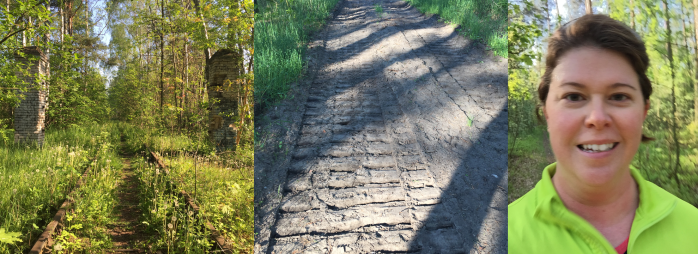
Now I contend with run of the mill critter encounters: spiders, dogs, snakes, and the occasional black bear.
Happy trails!
Enjoy what you just read? Please share on social media or email utilizing the buttons below, fans like you sharing what they love are what keeps this train rolling!
Want to read more works by Author KR Paul? You can find my first novel here and it’s sequel here.
Want more than that? Follow me on Twitter, Instagram, Facebook, and TikTok. Stay up to date on the latest KR Paul news by joining our mailing list.
Just looking for wild stories of cave diving, ultramarathons, blacksmithing, or powerlifting. Yeah, I’ve got those too!
Confessions from the Trail: Training
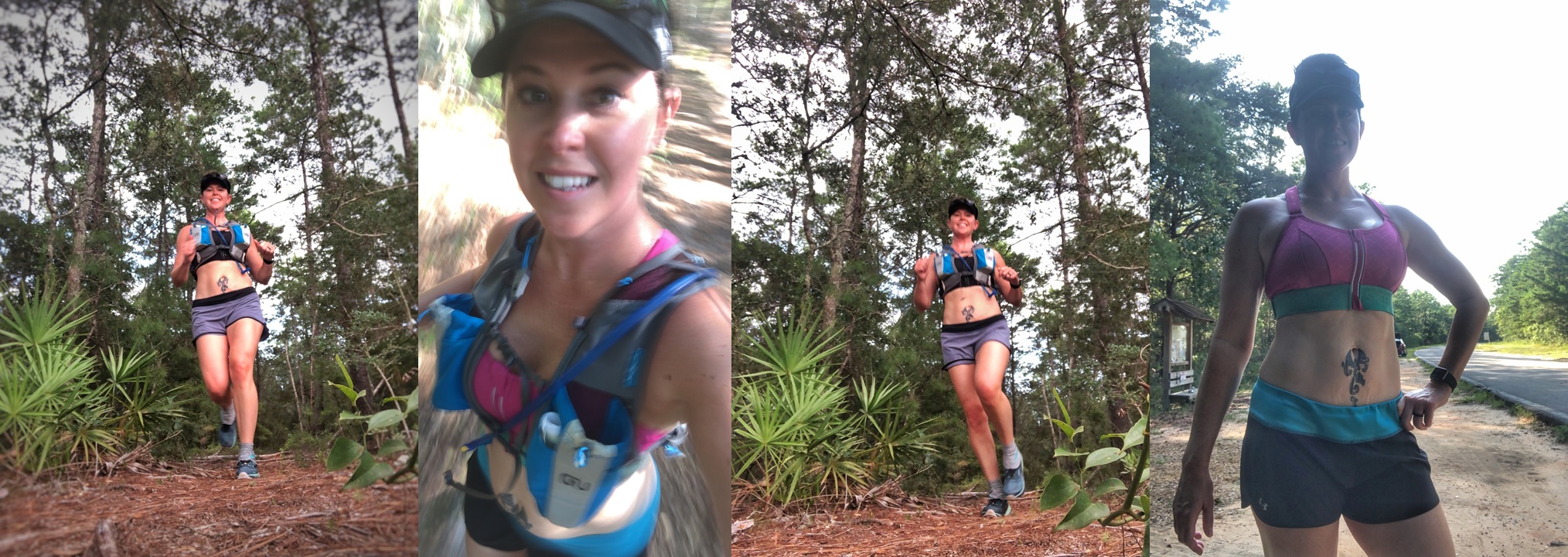
The next question I’ll tackle is about training. I got a lot of questions about it on Twitter and felt it deserved more than 280 characters could give.
How long does it take to prepare?
I’ll give the answer heard most in my old job: “It depends.” Honestly, this can be answered in several ways. How long does it take a professional? Not long. Most of them already run a large volume of base miles and can do a short ramp-up, taper down, then go race. How long does it take me? For-ev-er!
I like to compartmentalize and think of all my training (Ironman, trail running, bodybuilding, etc.) as “seasons.” Each season, I pick my “A” race: the one big event I know I want to complete. Then I build a schedule to get my training from here to there. This “season,” my A race is the Bataan Memorial Death March at the end of March. For Bataan, from my current level of fitness, I probably only need four to five months of training. That said, it’s August and I have eight months until I race Bataan. Why am I starting now? I haven’t been serious about a trail race in a while. I farted through MS50 as a 20k this past March after running the NOLA half in February. I had trained almost 100% on roads and paid for it dearly come race day for MS50. Now I live in a location where I have trails very close by and can devote time to running them without spending more time getting to the trail than I do on the trail.
Do you use a coach?
I’ve used coaches for triathlons and bodybuilding. Early on, I self-coached for Ironman 70.3 Orlando twice and missed my goal time, finishing two to ten minutes off my goal. I hired a coach for Ironman 70.3’s Galveston, Augusta, and Chattanooga. I was ten minutes faster than my goal at Galveston and blew an incredible seventy minutes and seventy-five minutes, respectively, off that goal for Augusta and Chattanooga. Clearly, the coach was worth it. Same for bodybuilding, I didn’t know enough about the sport to self-coach, so I hired one.
But when it comes to straight running races, I’ve never used a coach specifically for running. I’ve run for a long time. I know my body, I know my capability. I’ve had some races that are concurrent with Ironman spin up or while I was in prep for bodybuilding. But at those times, running wasn’t my focus, I was already fit and conditioned, I just ran them. This spring, I was in an offseason, no coach for any sport, and made my own training plan for MS50 and the NOLA half. I built the plan based on my experiences before, knowing how much I can push my body, and what was a reasonable expectation. It was a gamble, but it paid off. I set a new PR for myself on MS50 by three minutes and a half PR by almost five minutes.
I’m going into this season on my own plan, built around my own capabilities, and my own experience.
How long do I train? Do you do cross-training? Are you still weight lifting?
A lot, yes, and yes!
As you can see from my training plan, I start the season with no more than about ten to eleven miles per week and slowly ramp up to thirty to forty miles a week. This all translates into three to ten hours a week of running/hiking and about 5 hours of weightlifting. Every fifth week I dial everything back to give my body a break and reset for the next round. Across the top, it shows what days I lift and which muscle groups. I’m working to keep a balance of muscle and endurance building, but it’s tough. Excessive cardio negatively impacts muscle growth; I’m not actually aiming for a “fast” time on the course, I aim to finish. So, I feel like I can keep up with lifting five days a week, running four, walking one, and biking one.
Why the weird spread?
Monday’s run forces me to run on tired legs, simulating how I’ll feel late in the race.
Tuesday’s walk gets miles on my feet without pounding my joints and pairs with a relatively intense lifting day.
On Wednesday my sole focus is leg day in the gym and I have no cardio. Not really a break, but I can keep focused on some muscle growth and building the posterior chain (crucial to hill climbs and filling out a bikini).
Thursday’s bike follows leg day and helps spin off any lingering soreness.
Friday is my upper body strength day paired with a trail run and it’s a bear. I add in a little wine and pizza afterward, which makes it survivable though!
Saturday is a short and easy run on the treadmill to warm up for leg day number two.
Sunday is my long, slow, duration run on the trail. I also tend to go out paddleboarding with the family in the morning, but I suspect that will taper off as the weather cools down and miles ramp up.

What do you eat?
Wow, that’s a long one. In fact, what I eat during the season, during a long run, and on race day is its own full post, which I intend to tackle next. Stay tuned and see if you really can outrun the fork or if it’s better to track your nutrition. (I bet you can guess based on my visible abs!)

Happy trails!
Enjoy what you just read? Please share on social media or email utilizing the buttons below, fans like you sharing what they love are what keeps this train rolling!
Want to read more works by Author KR Paul? You can find my first novel here and it’s sequel here.
Want more than that? Follow me on Twitter, Instagram, Facebook, and TikTok. Stay up to date on the latest KR Paul news by joining our mailing list.
Just looking for wild stories of cave diving, ultramarathons, blacksmithing, or powerlifting. Yeah, I’ve got those too!
Confessions from the Trail: But, Why?

I was blown away by how much ya’ll liked my post on ultramarathons and I’ve decided to sit down to answer some of the common questions about ultra’s as well as specific questions about my training and races. I hope to post bi-weekly, but let’s be honest, between a full-time day job, prepping for my book’s release next month, and the long training sessions, that might end up as a pipedream! But I’ll knock out the questions and occasionally fill you in on how training for BUTS Barely Ultra (13.5 mi Heavy Half), Mississippi 50 (50k), and the Bataan Memorial Death March (26.1mi) are going as well as what the forecast for whether any of them will go is based on the pandemic.
First Confession from the Trail: the most common question I’m asked is, “but, why?” usually paired with a look of horror when I describe the distances of some of the races. 50k (31.1 miles), 50 miles, 100 miles, 200?? Why indeed.
I’ve read and seen enough of Simon Sinek to know, it all starts with “why?” Why would you devote 4, 6, 8 months of your life to this goal? What’s in it for me? There is no prize money (not for amateurs, anyway). Nike doesn’t sponsor trail runners and ultramarathoners. Training is long and intense. Injuries stack up. Races are far from civilization, so there are no fans to cheer you on.
Why in the world would anyone run an ultramarathon?
I can’t pretend I speak for every ultra runner out there. Hell, half the time, I can’t even speak for myself (usually after a long climb up steep terrain and I’m doubled over wheezing). But I have my reasons.
I think my first reason parallels the apocryphal story of George Mallory when asked why he wanted to climb Everest: “because its there!” I love a challenge, and the lure of a fresh challenge calls me like a siren’s song. The challenge is there. Sir Edmund Hillary rose to the challenge and is credited as the first climber to summit Everest, of his challenge, he said: “it is not the mountain we conquer, but ourselves.” In pursuit of this goal, I conquer myself.
But what does that mean for me? For one, I want to push my body to its extremes; push myself to what we call the Pain Cave. I’ve done half marathons on road and trail. I’ve done a marathon. I’ve completed five half Ironmans. Nothing makes you feel you have conquered your body like covering 70+ miles by swimming, biking, and running. I want that same feeling from conquering the trail.

I’m also aware that every body comes with a clock. It begins to tick with the first lungful of air and the second hand moves until… it doesn’t. I’m rounding the corner on forty and while my doctor tells me I’m in excellent health and have the body of a woman half my age, my knees creak as I climb the stairs. My shoulders have been through more round of physical therapy than I can count. I recognize that while I’m in great shape, it won’t last forever, and I want to chase down my adventures while I still have spring in my step.
Why indeed.
Then there are the mental aspects of the pursuit. I love a challenge. “It’s there!” And while the second hand is inexorably moving forward, I’m still capable of this pursuit. Not everyone can say that. I’m honest enough to say that I take particular pride in doing what others cannot or will not. I’m a horrible person who feels a sense of smug superiority at accomplishing goals of which others only dream. I have motivation. More importantly, I have dedication. And I have more ambition than three people combined. Channeling that determination and focus into a goal like this keeps me from world domination and being an insufferably smug bastard. Well, most days. It sneaks out every once in a while.
There is also peace in this pursuit. Running the trails beats me down. It punished my body and keeps my ego in check. There is peace in that kind of humility. On a chemical level, there is a peace in the endorphins that quiets my mind in ways that therapy cannot. I’ve come a long way in battling my demons, but sometimes an hour or two on the trails does more for shouting down horrible thoughts than any therapist or pill can do for me. (YMMV and don’t think trail running is the be-all, end-all of mental health.)
Why indeed.
Why do I chase a goal that has eluded me? A goal I’ve failed at three times so far? One that, honestly, I might never achieve? Because it brings me peace. It brings me joy. It keeps me mentally and physically balanced. It keeps me humble.
The trail doesn’t care who you are. The trail doesn’t care what car you drive, how much money you make, or what your job is. The trail chews everyone up with equal relish and grinds the humility into them. Just like life, you bring your best and hope it’s enough to survive.
Chase your dream.
Happy trails!
Enjoy what you just read? Please share on social media or email utilizing the buttons below, fans like you sharing what they love are what keeps this train rolling!
Want to read more works by Author KR Paul? You can find my first novel here and it’s sequel here.
Want more than that? Follow me on Twitter, Instagram, Facebook, and TikTok. Stay up to date on the latest KR Paul news by joining our mailing list.
Just looking for wild stories of cave diving, ultramarathons, blacksmithing, or powerlifting. Yeah, I’ve got those too!